Sunday, March 17, 2013

Rd.2 Aronian-Gelfand Candidates 2013.


Lets have a look at a brilliant positional cum tactical squeeze by Aronian against Gelfand in round 2.


LEVON ARONIAN-BORIS GELFAND
1. Nf3 c5 2. c4 Nc6 3. Nc3 g6 4. e3
(B)
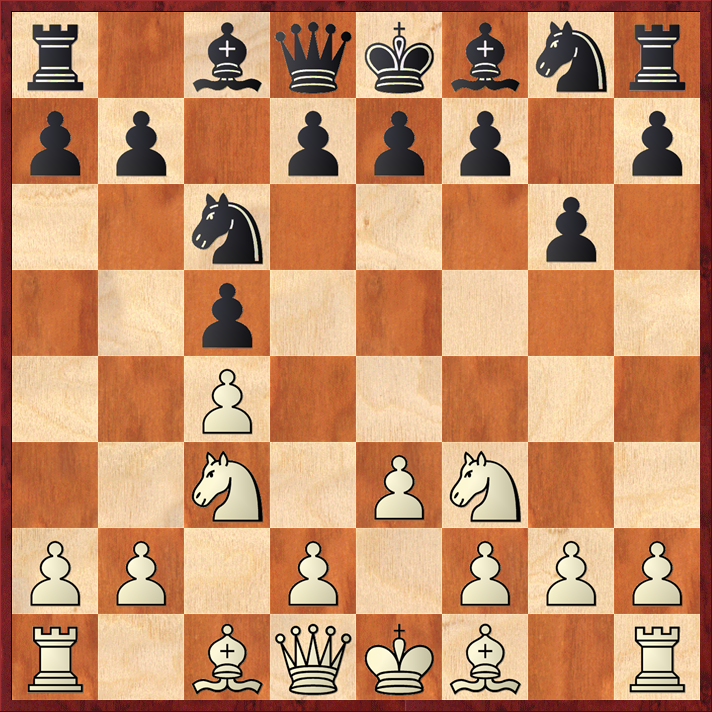
Its just move no.4 and already a critical moment according to me, what should black play?

 Nf6! (Bg7? as after d4 cd4 ed4 there is no way to stop white from playing d5.) 5. d4 cxd4 6. exd4 d5 7. cxd5 Nxd5 8.Qb3 Nxc3 (8... e6 9. Bb5)
(W)
How to recapture the Knight? with the pawn or with the queen?

 You are really smart if you dodged my question with  9. Bc4!
 the game now continued Nd5!? but lets look at a classic before that.
ANALYSIS OF A CLASSIC, BOTVINNIK-FURMAN 1963
 (9... e6 {earlier people used to make
this move and this gave white a good solid advantage.} 10. bxc3 Na5 11.Bb5 Bd7 12.Qa4 Nc6)
(W)
Black is all set to push white with a6. How did Botvinnik play energetically? 
 13. d5! opening up the position before black has developed ed5 14.0-0 Be7 15.Bh6! and white had a raging initiative for the pawn!
BACK TO THE GAME.

10. Bxd5 e6 11. Bxc6+ bxc6 12. O-O 
(B)
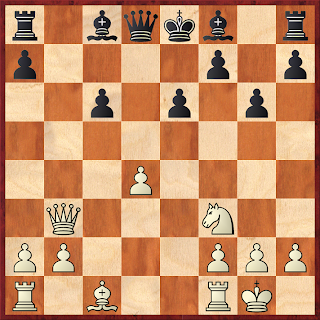
How do you assess this position? Who do you think is better?

{i think this is one of the hotly debated position in recent years. earlier it was assumed that white has an advantage here because of blacks pawn structure weakness and lead in developement for white. but things arent so static anymore. now people value the double bishop advantage in this position. Hence this position has been defended from black side by likes of Short,Bologan,Ni hua! Its a modern day tabiya in the words of Garry Kasparov!}
 Be7 ?! 

ANALYSIS OF THE RECENT GAME GIRI-AXEL 2013.
(12... Qd5 { is the main move in this position. While Gelfands move Be7 has been played only in 2 games.} 13. Be3 {was what Giri tried against Axel Smith in 2013 and i dont like what Axel played now} (13. Qc3 {is given in old sources as the move that gives white an advantage.})
(B)
What do you think should black play?

13... Qxb3 ?! {the queen on d5 is good, why to take on b3? instead f6 stopping Ne5 is a better option.} 14. axb3 {this is like the grunfeld or nimzo samisch variation b6 pawn sacrifice where the two rooks attack blacks weaknesses on a and c file.} Bb7
15. Rfc1 Bd6 16. Ne5 Ke7 (16... Bxe5 17. dxe5 {This is quite a depressing position with all the dark square weaknesses. The white B will be a monster on d6.}) 17. Nxc6+ Bxc6 18. Rxc6 {I seriously have no idea why a black player would aim to have such a position in which he is a pawn down and faces a long
and hard defense! Giri was able to convert his advantage later})
13. Be3 (13. Bf4 Qd5 was the continuation between Jakovenko-Gelfand Eilat 2012 which ended in a draw. Aronian surely must have come prepared!)  (13. Bh6 f6) 
13... Qd5 14. Rfc1
(B)
I dont know what you will play here but after looking at Giri-Axel there is one move that you will definitely not make! What is it?

 Qxb3 ?! {this is the move that one shouldnt make.How can a strong player like
Gelfand make a move like this? in an instant he opens the a1 rook which bears
down on the a7 pawn.Now we get a very similar pawn structure as Giri-Axel.} (
14... f6 {preventing Ne5. What is the problem with this move?i think there is none} 15. Nd2 O-O =)
15. axb3
(B)
Its your chance to be in Gelfand's Shoes. I dont think he played the best move here. Can you?

 Bb7?!  (15... f6 preventing Ne5 is important i think in this variation.16. Rxc6 Kd7! {prevents Rc7.} (16... Bb7 17. Rc7) 17. Rc4 (17. Rac1 Bd6 18. Nd2 Bb7 19. R6c3 Rhc8 {white because of being a pawn up holds some edge. But look, black is so well co-ordinated that a draw should not be out of his reach.})
17... Bb7 18. Rca4! {forcing a6 and weakening the b6 square which
the N will exploit.} a6 19. Nd2 +=)
16. Ne5 O-O
(W)
Finally its your turn to be Aronian! Do you think the c6 pawn should be snapped?

 17. Ra4! keeping the pressure (17. Nxc6 Bxc6 18.Rxc6 Rfb8 19. Rc3 a5 = {aronian must have realised that here its absolutely not possible to win. and why is it so? i think because white took a pawn which
was a traitor because it hemmed in the b7 B.})
17... Rfd8 {continuiting active play.}
(W)
All of whites pieces are developed. What to do next?

18. Nc4! {the N comes into a5. white is probing all the soft spots of black. one slip and he will fall. thats what happens.} Bf6? This according to me, not the computer was the fatal mistake. (18... Kg7 {i think it is important for the B to keep control of the b4 square. because Rb4 will really cause black discomfort.})
 19. Na5 Rd7 

(W)
Tighten the screws now!!

20. Rb4! the pressure keeps increasing! Ba6 21. Nxc6 {Now just look, earlier, when white would take on c6, black would exchange his B for N and then put a rook on b file and attack the b3-b2 pawns. But here white has a rook on b4. Hence we can say that white's play has been a total success.} Rb7
(W)
You need to put on your world class thinking cap and find Aronian's next move!

22. h3! {levon realises this is the right time to get rid of the back rank
weakness.But how do these players find time to make a little move like this when all of the battle is going on, on the other wing. To answer that question i think you will have to wait a few years till i reach that level!! } Kg7 (22... Rc8? 23. Ra4 +- {white just wins the game.}  23. Rxb7 Bxb7 24.
Ne5 
the rook wants to enter on c7 now, how to prevent it?

 Bd8 was Gelfand's choice.
 (24... Bxe5 25.dxe5 a5 26. Rc5 Bd5 27. Bd2 Bxb3 28. Bxa5+/- {though opposite coloured Bs i
think white has excellent winning chances.})
(24... Rc8! {i like this move.the rook exchange will retain excellent drawing chance.This according to me is the best move.} 25. Rxc8 Bxc8 26. b4 Bxe5 27. dxe5 a6 {and then put the B on b5! how the hell will white win.}) 25. b4 Rc8
(W)
Formulate a plan for Aronian now to win this endgame.

26.Bh6!! {Did you fall for my tricky question? its a tactical error by Gelfand and a player of Aronians class wont miss such a chance. But how does a challenger to world crown, make such a gross oversight even when he wasnt in acute time trouble? I think the thought of defending continuously got to Gelfand and he lost some of his optimisim thus overlooking this excellent tactic!} (25... f6 26. Nc6 Bb6 27. b5 {white retains good pressure.}) (25... Bd5 {might have been a better defense.})
 Kg8 {The black king is now so cramped for space!} (26... Kf6 27. Bg5+ ! Kxg5 28.Nxf7+ Kf6 29. Rxc8 Bxc8 30. Nxd8 Bd7 31. f3 e5 32. d5 Ke7 33. Nc6+ Bxc6 34.dxc6 Kd6 35. b5+- ) (26... Kxh6 27. Nxf7+ Kg7 28. Rxc8 Bxc8 29. Nxd8 +-) 27.Rxc8 Bxc8 28. Nc6 Bf6 (28... Bb6 29. Ne7+) 29. b5  29... Bd7 
(W)
Another one of those boring endgames! Is it really so?? White to play?

 30. g4!! {what a powerful stroke!! I was thinking that Aronian will show his great technical and positional skills to win this endgame but he finishes of things in a great tactical manner.} g5 (30... a6 $5 31. g5 axb5 32. Nb8 Bxd4 33.Nxd7 Bxb2 white should win this position. But now after g5, to make it easier for you to guess Aronian's next move i want to show off my own skills for a bit!

ANALYSIS OF S.NITIN-SAGAR SHAH 2012.
Black has an overwhelming advantage but here i found an accurate of getting things to the finish line.
(B)
How should Black play in Aronian Style?!

g5! Bg3 h5! gh5 g4 Be2 Bh6!

The small tactical continuation, gives black so much activity that the rest is just walk in the park. As i played this game 6 months ago, do you think Aronian borrowed this idea from my game!!! High hopes!

31. h4 gxh4 32. g5 Bxc6 (32... Bg7 33. Bxg7 Kxg7 34. Nxa7) (32... Bh8 33. Ne7#) 33. bxc6 Bd8
(W)
Its your last chance to play like Aronian, Dont miss it!

34. Kg2! Simplicity is the best. (34. g6 if we are too nervous then we make moves like this which complicate the win.opponent is devoid of counterplay, why to hurry? fxg6
35. Bf4 {but why to complicate})
34... Bc7 35. Kh3 the saddest part is that the black king cannot come out without losing a pawn.white will gobble h4 then walk his king over to the other side and just win!
I am tempted to say some superb play by Aronian but more than that i think Gelfand really had an
off day, missing a lot of defensive possibilities! 1-0


Saturday, March 16, 2013

Rd.1 Ivanchuk-Grischuk, Candidates 2013.


     Ivanchuk at the start of the game in London!
   
This was according to me the best game of Round1 and hence i decided to annotate it.
You can have a chess board with you to play over the moves or you can answer the questions posed to you in later diagrams! All in all i hope you get inspired by the play of both white and black!
1. Nf3 d5 2. d4 Nf6 3. c4 e6 4. g3 Be7 5. Bg2 O-O 6. O-O dxc4
(w)
The starting position of Open Catalan.

{the open catalan is the most logical choice that black has in this position. If he
wanted to play the closed catalan with c6, then it would have been more useful
to insert a check with Bb4. But after giving Bb4+ Bd2 Be7, black cannot then
take dc4 as then Bd2 is a free tempo up in the open lines of catalan.}
 7. Qc2 a6 8. Qxc4 b5 9. Qc2 Bb7 10. Bg5!?
I call this the Konopka line! Very Positional!
{this is according to me underestimated weapon in whites hands. When white plays this line, he risks very little and
black has to play accurately to equalise.Good positional players like Ulf
Andersson and Michal Konopka have made a living out of this line.} (10. Bd2 {
is the main line which everyone is playing these days thanks to efforts of
Kramnik and books by Avrukh and Bologan.})
  10... Nbd7 {the entire battle revolves around, the fact whether black can get in c5 or not.}
 11. Bxf6 ! {to remove blacks control from the c5 square.} Nxf6 (11... Bxf6 12. Ng5!) 12.
Nbd2 Rc8 13. Nb3 (c5 is stopped. black needs to find other ways) Be4!?
How do the two move Qc3 and Qc1 differ from each other?
{there are mainly 2 moves in this position Qc3 and Qc1.
Ivanchuk has played before Qc3 against Kosintseva in 2010. But maybe here he
will choose the safer Qc1.} 14. Qc3 (ivanchuk choses the riskier move.)
 (14. Qd2 {is not particularly good as you have to keep control on the c5 square.} c5 =)
IMPORTANT ANALYSIS VARIATION. 
if you look through this variation carefully you will understand the dangers awaiting black in this opening.
(14. Qc1!?(instead of Qc3) c5 {black has executed c5 but somehow, white retains an initiative. Have a look at this typical variation.} 15. dxc5 Qc7 (15... a5 16. a4) 16. Rd1 Bxc5
17. Nxc5 Qxc5 18. Qxc5 Rxc5 19. Rac1
(B)
This equal looking position isnt so equal!

{Because of the weakness of the back rank, white seizes the c file.} Rxc1 20. Rxc1 Rd8 21. Ne5 Bxg2 22. Kxg2 h6 23. Nd3!
Thats the dream position for any white player in this variation.

{excellent position for the N. it blocks the d file and the N defends the
b2 pawn. at the same time, the rook is going to infiltrate on the c file on
weak squares like c7 and c6. the a6 b5 pawn structure is a weakness in this
position and the combined effort of the white N and the R will cause great
havoc.})

14... Nd5 15. Qd2

PREVIOUS GAME OF IVANCHUK IN THIS LINE. (Analysis)
(15. Qa5 (instead of Qd2 as in the game) {This was the continuation in the game
Ivanchuk-Kosteniuk 2010.} Bb4 16. Qxa6 c6 {threat is Ra8-Rb8.} 17. Ne5 Bxg2 18.
Kxg2
(B)
Ivanchuk had grabbed a pawn against Kosteniuk but what is blacks best move?

Ne7! {i dont think white can expect more than a draw in this variation as his queen is trapped.}
(18... Qc7?! {Kosteniuk made this inaccurate move and ivanchuk later won. But Grischuk wouldnt have made such a mistake}) 19. e4 f6 (19... Ra8 20. Qb7 Rb8 21. Qd7 $16) 20. Nd3 Ra8 21. Nxb4 $6 {Bacrot was desperate to win against an unknown player called Stern.} (21. Qb7 Rb8 22. Qa7 {its best for
white to take a draw.}) 21... Rxa6 22. Nxa6 only black can be better. {Bacrot-Stern 2012.})


(B)
What should black play here?
15... c5! {Exactly!! the freeing move is executed in good circumstances and I think black has equalised in this line.} 16. dxc5 Bxc5 17. Nxc5 Rxc5 18. Rac1 Rxc1 19. Rxc1 
(B)
Black is very close to equalising but he must make one more accurate move. what is it?

Qa8! Making way for the rook to c8. {this variation was played in Mumbai in the game
Miroshnichenko-Humpy 2009.} 20. Bf1!? {white wants to move his N. this is a novelty but hardly a dangerous one} (20. Qd4 {was the main move.} Nf6 21. Rc7 (21. Qc5 !?) 21... Rc8! {after this move i think black equalises.}
 20... Bxf3 {most principled.} (20... Rc8 21. Ne5! {was the reason why the B on g2 was
removed.}) 21. exf3 Rc8
(W)
Do you think white should exchange the rooks? What do you think should be his move?

{i think if the rooks are exchanged, black wont have any problems. here white should play Rd1. But ivanchuk was not concerned with the rook exchange.} 22. h4!? This is a move which i cannot explain. Its just that it feels right to push this pawn up the board and make some more breathing space for the king.
(22. Rd1 Qc6 23. f4 Qc2 24. h4)
 22... h5 23. Bd3 Rxc1+ 24. Qxc1 Qd8 25. a3 g6 26. Be4 Qf6 {it seems to me that white has a microscopic edge but somehow, black seems to hold the balance easily.}
(W)
Can a master like Ivanchuk squeeze a win out of such a position? Against me, Yes but not against Grischuk!!

 27. Qd2 Kg7 
(W)
Its technique time folks! What do you think should white play?

28. f4?!
(28. Kg2! {i and one of my friend sohan were of the opinion that this move removing the king
from g1 is more important than f4. maybe it is. the result wont have changed
but then good technique is all about fining even the minisculy better move as
you never know when they can add upto a big advantage.}) 28... Nb6

(W)
If Steinitz was white he would have made his move without thinking! Can you do the same?!!

29. b3!(Knights must be denied of advanced posts!)
Nd5 (29... Qa1+ 30. Kg2 Qxa3 $2 31. Qd4+ and the knight falls. a small tactical point to be noted.)       30. Kg2 Qa1

(30... Qc3 {this endgame seems a little dangerous for black so i like the way Grischuk played.} 31. Qxc3+ Nxc3 32. Bb7 a5 33. Ba6 Kf6 34. Kf3 Ke7 35. Ke3 b4 36. axb4 axb4 37. Kd4 Kd6 38. Kc4 Nd1 39. f3 Ne3+ 40. Kxb4 Nf5 41. Bd3 Nxg3 42. Kc4 {white seems to have a small edge})


(W)
What should white do now?

31. Bxd5 {I think this was very necessary. As Capablanca had said a century ago, the N and Queen for a deadly combo! Before that happens Ivanchuk gets rid of the pesky beast!} exd5 32. Qxd5 Qxa3 33. Qe5+ (33. f5 gxf5 34. Qxf5 Qxb3 35. Qxh5 a5 36. Qg5+ Kh7 37. Qf5+ =) 33... Kg8 34. Qe8+ Qf8 {
i like the fighting spirit of both the players. Both wanted to fight till the end.}  35. Qc6 Qb4
(W)
Imagine yourself in Ivanchuk's shoes. You have around 30 seconds in your clock to make the last 5 moves. there is a perpetual available with Qe8. What would you do??

36. f5 ! {Its moves like this that make me respect a player like Ivanchuk. He is down but not out! He doesnt submit to the draw. Instead fights on with whatever little time he has got!! He is playing chess not the candidates tournament! the exclamation mark is given only for his courage! the
position is still drawn.} Qxb3 37. fxg6 Qe6 38. gxf7+ Kxf7 39. Qb7+ Kg6 40. Kf3

(B)
Its always fun when top players reaching a pawn ending? Is black winning after Qf7? Assess.

 Qf7+ 41. Qxf7+ Kxf7 {it always interesting to see pawn endgames in such top
level battles. but here there aint any blood left in the body!} 42. Ke4 a5 43.
f3 a4 44. Kd3
(B)
None of them could win but they didnt leave a single chance to fight on! Hats off to the true Chess masters!

{white will have 2 passers on the kingside, black has 2 on the queenside! So signing a truce is very logical. I loved the fact that even in the first round, both players were read to play such a hard fought battle.}
1/2-1/2

Wednesday, January 9, 2013

Position for the day - 9th Jan

A. Wotawa is a Magician on the chess board. He composes studies which are so beautiful that if you are able to solve them, you usually get that aesthetic pleasure which is unparalleled. Here he asks you to find a win for white.

(W)
WHITE TO PLAY AND WIN.


ANSWER:
White's first priority is to stop the b2 pawn from queening. Hence the first move is obvious 1.Rb7 a3. Blacks threat is now a2 and white has nothing in his power to stop the pawns. But how about creating a mating net? Am i crazy?!! Have a look!

(W)
White now played 2.Kc5! and black seeing what he could do other than to push the pawn played 2...a2
One of the pawns is going to queen! What is white to do? Is it time to throw in the towel? Not at all! Its time to form a mating net!

(W)
White now played the shocking move 3.Rf7!! What a move! Trying to weave a mating net around the king in the center of the board is one of the most amazing and imaginative thing in chess! 3..b1=Q (black could have tried 3...Kf7 4.Bd5 Kf6 5.Ba2 Ke5!? 6.Bb1! Kf4 7.Kd4 Kf3 8.Ke5 Kf2 {Kg2 f4 and white will win} 9.Kf4 +- a line which you must calculate.)
Black has made a queen now but the end is very quick! 4.Bd5 Ke5 5.f4# the king is slaughtered in the middle of the board. The final position deserves a diagram, dont you think so!!

Hats off to the brilliant Composer Wotawa, who from a seemingly banal position created a beautiful matting pattern!

Saturday, June 30, 2012

Is Queen really the strongest?

Today i want to invite you to solve a study, which i saw in the lecture of GM Eugene Perelsteyn at chesslecture.com.
                               (W)

SOLUTION: Black king is almost mated if white can clear the e pawns. Hence his first move is obvious 1.e6! black must take the pawn 1...Qe6.The queen attacks the bishop and hence white has no time to push his e pawn. 2.Bf5! Its obvious to us now that the e pawn must not be allowed to move and hence black plays 2...Qe5! Its now time for white to tighten the noose around the black king.
                              (W)
We can see that if black were given the move he would happily escape with Kc2. Hence we must shut that opportunity with 3.Kd1! Blacks move is obvious now. the queen cannot move and the king is also boxed in. 3....e6. if black would have moved the a pawn then white would have simply snatched the pawn with Ne7 when black would run out of moves. But now the Bishop is attacked and white decides to defend it with 4.Bg6 (4.Bh7 would have been bad as it allows 4...Qh2 attacking the Bishop) the only way for black to continue now is to keep attacking the bishop and he plays 4...Qg7!

(W)
Now its time to include our knight in the game with 5.Ne7. the Knight is taboo and the threat is now to play e5 but black himself plays 5...e5! as the door slams shut on the Bishop its now the turn of the knight to harass the black king with 6.Nc6! the threat now is not only Nb4# but if black were to take the B then Ne5 wins with queen. So is it all over for black?
(B)
Good players are the one's who are ready to think from both sides! Here its important to find blacks only saving move with 6...a5! What we witness now is great camaraderie between the white Knight and the Bishop. the Knight sacrifices itself to let the Bishop win the laurels with 7.Ne5! the knight has to be taken 7...Qe5 and now its zugzwang time with 8.Bf5!!
(B)

I wouldnt be wrong if i say that many players would stop their calculation when they reach this position thinking its game over! And i can say that because i myself stopped here! But you would be very careless if you didnt check what happens to 8...Qe4! though this move loses, if you didnt see it, it means you are not alert to your opponents possibilities! And now comes the final point of the problem. taking the queen though leaves white with a pawn to the good, the active black king ensures that white will have nothing more than a draw and hence the right move is 9.Kc1!! after which black has only one move to play 9...Qf5 10.gf5 g4 and white king is just in time to stop the g pawn with 11.Kd1 when the f pawn queens!

It was amazing to see how the combination of the Knight and Bishop really outclassed the Queen!

Sunday, June 24, 2012

Too close for comfort!

RICHTER 1953
White to play and win

The two knights anf the rook form a mating net around the black king but unfortunately one of whites knight is falling. So white must be tricky! He starts off with 1.Kg5 Re5 (Rh4 2.Rg3 Kh2 Kh4 loses) 2.Kf4 Rh5 3.Rg3! Kh4 (Kh2 4.Nf3 Kh1 5.Rg1#)

                               (W)

Just have a look at this position. It might seem that black is now fine but the fact that his rook is close to the king doesnt let his king escape and now with 5.Rg1! black simply has no way to save to the game!

GURVICH 1962
 White to play and win

Using the knowledge acquired in the last problem we can surely try to solve this one! Its obvious that white must start with 1.Bf6! Kf7 2.fe6 Ke8 and now a cheeky move 3.Ra2! threatening Ra8# 3...Kd8( ef6 4.Kd6 leads to a forced mate.)
(W)
It seems as thought black king is excaping but now white makes a wonderful sacrifice 4.Be7!! Ke7 (Kc7 5.Bf8 Rf8 6.e7 and that ending is losing for black) 5.Ra7 Kd8 (Ke8 6.Kd6 is again a similar pattern) Is now white left with any ammo? the little pawn comes to the rescue 6.e7!! Ke8 (Kc8 7.ef8=Q Rf8 8. Ra8+-) 7.ef8= Q Rf8 (Kf8 doesnt change much)

(W)
Again the black rook is too close to be good! and hence White king moves in with 8.Ke6 and black must decide whether he wants to resign right now or after a few moves!

A pattern that is worth remembering!

Saturday, May 12, 2012

Game 1

GAME 1 World Championship 2012.
ANAND -GELFAND
11.05.2012


Each World Championship match brings with it 2 different types of personality battling out on the board!
In this Match between Anand-Gelfand, though the two have almost identical age, their playing styles highly differ!
Anand The agressive tactician and Gelfand the the cool strategist make this duel mouth watering for chess fans! But Gelfand who has always been so loyal to his openings, shocked the world by playing Grunfeld Defense which he has never played since the last 10 yrs! So lets have a look at Game 1

1.d4 I am of the opinion that Anand has played d4 just so that Boris thinks that he is facing the queens pawn openings in this world Championship and then Anand will revert to 1.e4 from game 3 where he will try to rip apart Boris's Najdorf! Well we need to wait for game 3 to see if i am right!
1...Nf6 2.c4 g6 3.Nc3 d5 Grunfeld it is! It must be a surprise for Anand because Gelfand rarely plays this!


(W)
THE GRUNFELD DEFENSE!


4.Nf3 Bg7 5.cd5 Nd5 6.e4 Nc3 7.bc3 c5!

W

Of course for Gelfand this move was very natural. It was met with a sneaky check on b5! That might lead us to think that why not first 0-0 and then break with c5!  7...0-0 and believe me when i say there is a huge difference!! after 7...0-0 8.Be2 c5 whats the big deal is what many would ask! we the point is after 9.0-0 cd4 10 cd4 Nc6 11.Be3 logically defending the center. And now of course d4 must be subjected to more pressure and hence 11...Bg4 It might seem that white center is too saturated but....
     Analysis variation (W)

White now plays the brilliant 12 d5! Ba1 (Ne5 13.Ne5 Be2 14.Qe2 Be5 15.Rad1+/- it might seem that the position is equal but on closer inspection we realise that whites central majority is easier to mobilise than blacks queenside majority and hence white holds a significant edge.) 13.Qa1 Na5 14.Bh6 white wins back the exchange and forces the small weakening of the kingisde with f6.
What was all this analysis for? Well it was to prove that 7...c5 was necessary and black cannot 0-0 first and then play c5 trying to avoid Bb5+. Back to the game now

8.Bb5+ Nc6 (8...Nd7 is one option. But i think what black needs to do is to put pressure on d4. and once the N is forced to develop on d7 instead of c6, i think Bb5+ has done its job! Also playable was 8...Bd7 but after the B exchange we see that our light squared B was in no way helping to defend the d4 square but his Light squared B was indirectly attacking our center by putting pressure on N on f3 who was defending the d4 pawn! Well so much for the strategy with the little check! Gelfand chose the Principled 8...Nc6

9.d5 this is rarely played. the much more common move is 9.0-0 0-0 10.Be3 cd4 11.cd4 Bg4 and now white can make use of his move Bb5 to play 12.Bc6 bc6 13.Rc1
     Analysis variation (B) 

This position could have been reach and after this 13...Qa5 14 Qd2 Qd2 15.Nd2 we reach such a wonderful imbalanced ending. black has a weak pawn on c6 but to compensate for it he has two Bs and pressure on d4. Such endings if studied in depth can really help one to improve his game!


9...Qa5!? ( 9...a6 was an option but after 10.Be2 Bc3 11.Bd2 Ba1 12.Qa1 Nd4 13.Nd4 cd4 14.Qd4 f6 15.h4! was seen in Gustafsson-Lagrave when white has a dangerous initiative.)
10.Rb1 defending the Bishop and putting the rook on a better file cannot be bad. its downside though is that the a2 pawn is undefended.
10...a6 (snatching a pawn with Bc3 was an option 11.Bd2 Bd2 12.Qd2 Qd2 13.Kd2 a6 14.Bc6 bc6 15.dc6 and we reach a similar ending as in the anand game but black has no 2 Bishops and hence white can try for an advantage here.)
11.Bc6 bc6 12 0-0! Anand gives first priority to king safety and i think it is a very logical move. the ball is now in Gelfands court and i am sure you need nerves of steel to make the next move that he made!

(B)

12...Qa2! such pawn snatching in such a huge game and that too with your king in the center! Phew! Gelfand i think must have seen it at home or he was in extremely good form because the next few moves that he made virtually took the game to a position from where only he could press! Gelfand's philosophy: i have taken a pawn, anand will attack me tooth and nail but with grim defense i will hold my fort and in the worst case anand will win a pawn which means that the material will be equal as i have already snatched the a2 pawn! this is exactly what happened in the game.

13.Rb2 Qa5 14. d6!

(B)

What a move by Anand! he has prevented Gelfand from castling and at the same time ed6 will be met by Qd6 with a very dangerous attack for white. It might seem that black is dead but on closer inspection, one will see that if black could control the d7 square one more time then he can safely 0-0. and hence we find Boris's next amazing defensive move
14...Ra7! beautiful defense ( Qd8 also defended the d7 square but after 15.Bf4 black cannot 0-0 as it is met by de7 Qe7 and Bd6 winning an exchange.)
15. Bg5 (15.Bf4 was another option because we are controlling the all important c7 square. but then cant black just 15...0-0 and yes i think black should be alright after that. With Bg5 Anand is forcing black to take on d6.Also after 15.Bf4 pinning the d pawn with 15...Rd7 gives black a adequate game.
15...ed6 16.Qd6


(B)

Gelfand now produces two accurate moves which leaves anand struggling! 16...Rd7! aking the queen to go away so that black can 0-0 17. Qc6 so finally Anand's efforts have been rewarded with a pawn! but wait a second arent the number of pawns just equal? dont you forget that black had risked everything to snatch a pawn on a2 and this is the reward for his courage! though white has recovered his pawn, he still faces the unpleasant task for facing the two strong Bishops.
17....Qc7 18.Qc7 Rc7 this position is a tribute to the modern day sharp battles. Scintillating attacks are often countered with brave defense and the result is that the excitement peters out and what is left is a chessboard with only bruises and fights of the past few moves!

(W)

To say that this position is equal would of course be a mistake. black holds the advantage due to his two strong Bishops. But lets just say that Anand was alert enough not to let blacks advantage turn monsterous, he kept his cool and achieved a draw. Here are the last few moves.
19.Bf4 Rb7 20 Rc2 0-0 21 Bd6 Re8 22.Nd2 f5 23 f3 fe4 24.Ne4 Bf5 And a draw was agreed.

Game 1 was exciting! Both the players were surprised. First Anand must have been surprised by Gelfand's choice of Grunfeld and then Anand stunned Gelfand by the surprising 9.d5. But i overall think that Gelfand played better in this game and with him being white in Game 2 the Madras Tiger might just be feeling a tad uneasy!

Thursday, April 5, 2012